
I grew up in a very religious family. My father was a Lutheran minister. My mother held important roles in the church. My parents insisted our entire family had to be good examples for other people in our town, which meant being conservative in our behavior and not having any vices. Religious holidays were celebrated with the utmost reverence. Mom and dad would have been shocked and appalled to learn the Christmas holidays in Spain start with a lottery. Gambling! Oh my!
1. Christmas kicks off with a lottery.
Every December 22 el Sorteo Extraordinario de la Loteria de Navidad (the Extraordinary Christmas Lottery) is held. The first prize, el Gordo (the Fat One), is worth millions of euros. No wonder it's the most popular lottery in Spain!
Here's the really interesting twist. Orphans brought up at San Ildelfonso school pull out numbered balls from drums. The children sing the numbers and the corresponding prizes. That's right. They sing the numbers. Why singing and why orphans?
Legend has it that San Ildefonso’s orphans once chanted prayers through the streets of Madrid for alms. They were chosen for Spain's Christmas lottery because as orphans they were thought to be less prone to cheating. Fascinating tradition!
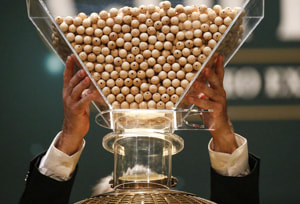
The numbers on the lottery balls are laser engraved to ensure they are all identical in weight. They are carefully examined and guarded before the lottery.
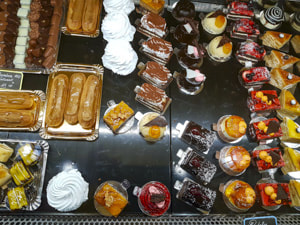
Once the holidays have officially begun, it's time to indulge a little, or maybe a lot. My favorite L'Eliana bakery offered mouthwatering goodies fit for a king!
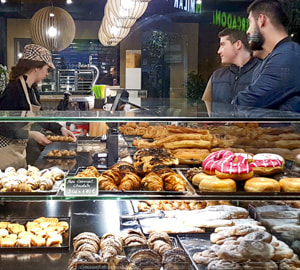
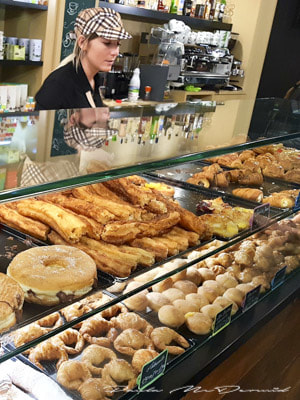
Patrons ordered plates overflowing with treats to enjoy in the cozy coffee shop or the outdoor cafe.
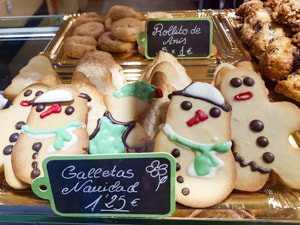
Galletas (cookies) in the bakery window. Are those snowmen? It's 60 degrees here!
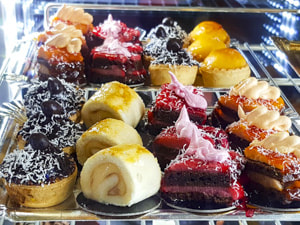
My goodness! How do you choose? So much deliciousness, so little time!
2. Big gifts are not given on Christmas.
December 24 is la Nochebuena (the Good Night). Homes are decorated with el Belén (the nativity scene of Bethlehem) and arboles de Navidad (Christmas trees). Families gather for dinner, sing Christmas songs, and attend la Misa del Gallo (The Mass of the Rooster). It has that name because legend says a rooster crowed the night that Jesus was born. Traditionally, children are given a few smaller regalos (gifts) on Christmas Day, but the big gifts are given on January 6.
December 24 is la Nochebuena (the Good Night). Homes are decorated with el Belén (the nativity scene of Bethlehem) and arboles de Navidad (Christmas trees). Families gather for dinner, sing Christmas songs, and attend la Misa del Gallo (The Mass of the Rooster). It has that name because legend says a rooster crowed the night that Jesus was born. Traditionally, children are given a few smaller regalos (gifts) on Christmas Day, but the big gifts are given on January 6.

A bakery in L'Eliana displayed a nativity scene with the stable and trees constructed of baked bread.
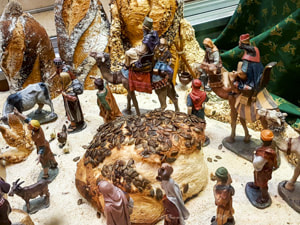
The Three Kings rode their camels through a rocky terrain also made of bread. Creative!
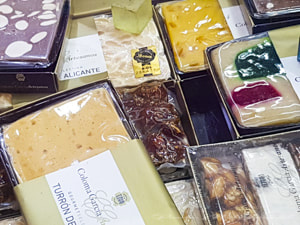
The traditional after-dinner treat on la Nochebuena is turrón (nougat).
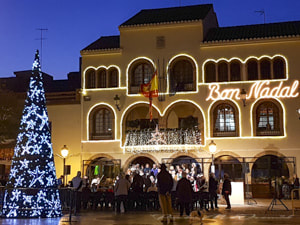
A local choir dressed in traditional costumes sang Spanish Christmas songs in the L'Eliana town square.
3. April Fool's Day is in December.
December 28 is el día de los Inocentes (Day of the Innocents). It's Spain's version of April Fool's Day, when pranks are played and the media airs fake news and silly stories. (Sounds like Saturday Night Live!) If that doesn't get you into the holiday spirit, I don't know what will! I didn't prank anyone, but wait until next year!
4. Grapes bring good luck.
December 31 is Nochevieja (New Year's Eve) with celebrations and fireworks. At midnight, las doce uvas de la suerte (the twelve lucky grapes) are eaten, to bring good luck for each of the twelve months of the coming year. Then cava (champagne) is raised in a toast, and the party continues through the night with more cava, singing and dancing.
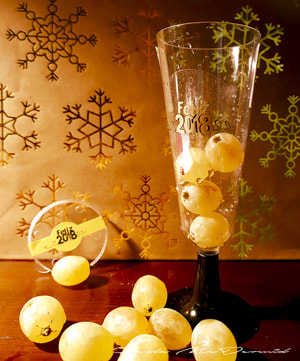
My twelve lucky grapes! I took this photo exactly at midnight as the bells began to chime, then tried to eat the grapes before the chiming stopped. But they were full of seeds! I had get the seeds out and then gobble the grapes down fast! LOL.
5. Santa Claus doesn't bring gifts to kids.
January 6 is Epiphany, el día de los Reyes Magos (The Day of the Magic Kings). In many countries, the coming of the three wise men bearing gifts to the Christ child is celebrated twelve days after Christmas. It's called the Feast of the Epiphany, Twelfth Night, or King's Day. That's the day Spanish children receive many gifts, which they believe they were delivered by the Kings. Santa Claus doesn't get any play in Spain! Spanish kids write letters to the Kings asking for toys and presents.
On Epiphany Eve (January 5th) children set out their shoes to be filled with presents. Gifts are left for the Kings and sometimes a bucket of water is offered for their thirsty camels. (That's something I would do—take care of the camels!) In the morning, excited kids get up early to unwrap the wonderful presents left for them.
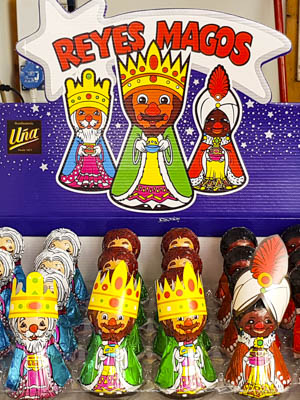
Christmas markets offer toys, games, clothing, and CANDY!
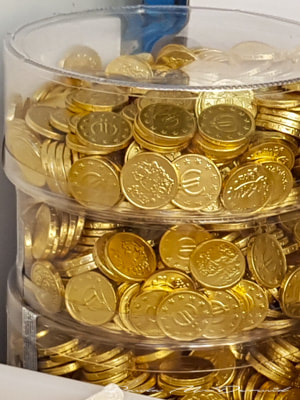
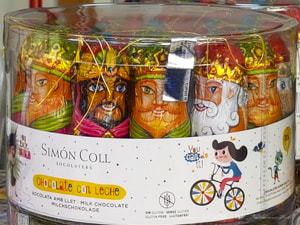
Gold foil wrapped chocolate coins, foil-wrapped chocolate Kings, and bins full of favorite sweets. Enough sugar to make your teeth fall out!
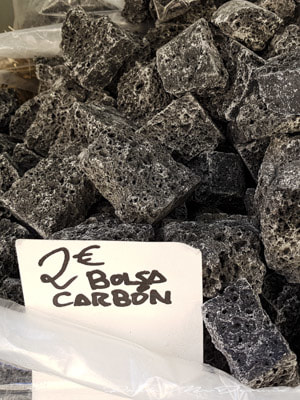
If a child has been “bad” that year, he/she is given a chunk of carbon. It looks exactly like lava rock, but it's sugar candy, so the child knows he/she is still sweet. I was sceptical about eating it, but the shopkeeper let me try a piece. It's very sweet and crunchy.
6. Watch out for the bean in your cake!
After gifts have been opened, families celebrate Epiphany by gathering around a table to eat la Roscón de Reyes (King Cake). The cake is a circular-shaped sweet pastry decorated with dried fruit, sugar, and almonds. A small trinket and a dry fava bean are hidden inside. Whoever finds the trinket is crowned "king" or "queen" for the day, and whoever finds the bean has to pay for next year's Epiphany party.
After gifts have been opened, families celebrate Epiphany by gathering around a table to eat la Roscón de Reyes (King Cake). The cake is a circular-shaped sweet pastry decorated with dried fruit, sugar, and almonds. A small trinket and a dry fava bean are hidden inside. Whoever finds the trinket is crowned "king" or "queen" for the day, and whoever finds the bean has to pay for next year's Epiphany party.
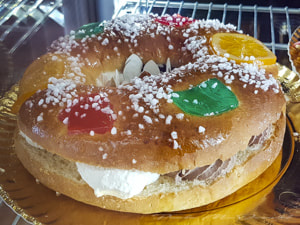
La Roscón de Reyes from the local bakery. Yummy! Celebrating Epiphany with a king cake or similar type of pastry is a tradition that's enjoyed around the world, particularly in countries that are predominantly Catholic. In the U.S., king cake and Mardi Gras go hand-in-hand.
My first Christmas and New Years in Europe.
This was the first time I was away from family and the Christmas traditions I grew up with. I discovered holiday traditions in Spain that were like those in America, and some that were completely new. I sampled the holiday treats (I restrained myself from pigging out), joined in the festivities, and really enjoyed the Spanish songs and music.
You remember those twelve lucky grapes? Just living my dream here in Europe makes me the luckiest person in the world! 2017 was flat-out amazing. 2018 promises to be even more exciting.
La vida es buena! Life is good!